Indoor playground trends in the U.S. are moving fast because parents want more than a rainy-day backup plan. They want clean, safe, active places where kids can climb, jump, pretend, learn, and socialize while adults can work for 30 minutes, drink decent coffee, or book a birthday party without chasing every detail.
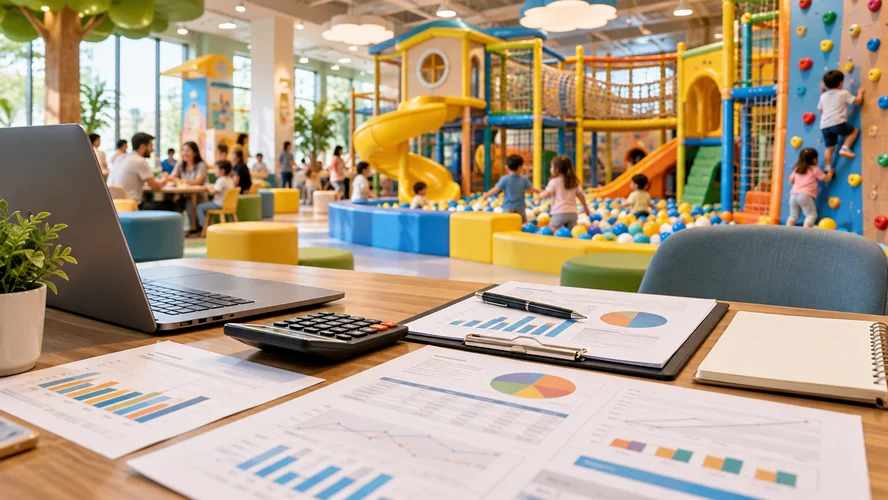
That shift is changing the business model. Grand View Research estimates the global indoor amusement center market at $54.73 billion in 2025 and projects $121.54 billion by 2033. North America held the largest revenue share in 2025.
Indoor playgrounds are becoming full family entertainment centers. Strong venues combine better design, smarter technology, visible safety, and revenue streams that go beyond walk-in tickets.
Indoor Playground Trends: What Is Driving Demand?
U.S. families have three practical needs: reliable indoor activity, safe social play, and convenient events. Hot summers, cold winters, wildfire smoke, heavy rain, and dense urban neighborhoods all make climate-controlled play more attractive.
Parents also understand the value of movement. The CDC says kids ages 6 to 17 need at least 60 minutes of physical activity each day, while preschoolers should stay active throughout the day. Indoor playgrounds fit that need when outdoor play is hard to schedule.
Retail real estate is another driver. Shopping centers need reasons for people to visit in person, and play-based attractions create repeat trips. ICSC reported that landlords are adding immersive experiences, gamification, live events, and entertainment tenants. As Steve Triolet of Partners told ICSC, retailtainment is in its “honeymoon phase.”
1. Active Gaming Is Replacing Passive Play
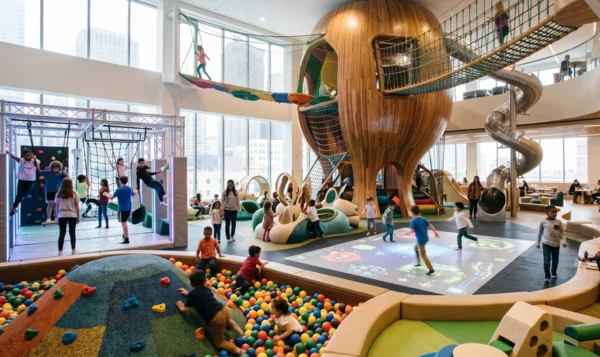
The biggest trend is active gaming: physical play connected to digital scoring, lights, sensors, projections, and challenges. Kids still climb, crawl, jump, and slide. Now the structure reacts.
You can see this in projection-mapped climbing walls, interactive trampolines with scoreboards, LED obstacle courses, motion-tracking dance games, and RFID wristbands that track points.
Active gaming gives operators fresh reasons for repeat visits. A static slide feels the same after a few trips. A timed challenge, seasonal game, or leaderboard gives kids a reason to come back and beat their score (for more on this, see our in-depth report on FEC technology trends).
2. Indoor Playgrounds Are Becoming Family Hubs
The newer U.S. model looks more like a neighborhood hub.
Modern indoor playgrounds now add coffee bars, coworking corners, calmer toddler zones, party rooms, after-school programs, STEM workshops, and private events.
This makes the business less dependent on Saturday walk-ins. A venue can serve toddlers on weekday mornings, homeschool groups in the afternoon, birthdays on weekends, and camps during off-peak hours.
The practical lesson: every square foot needs a revenue job. A quiet parent lounge can support longer visits. A good cafe can raise average spend. A well-designed party room can become a profit center.
3. Design Is Getting Calmer, Smarter, And More Brandable
U.S. indoor playground design is moving away from loud rainbow plastic as the default look. Bright colors still work in high-energy arcade-style venues. Many newer play cafes and premium playgrounds are choosing softer palettes, natural textures, better lighting, and cleaner sightlines.
Common design directions include nature-inspired play, city and role-play themes, space or science concepts for older kids, vertical play towers, better parent visibility, and photo-friendly party zones.
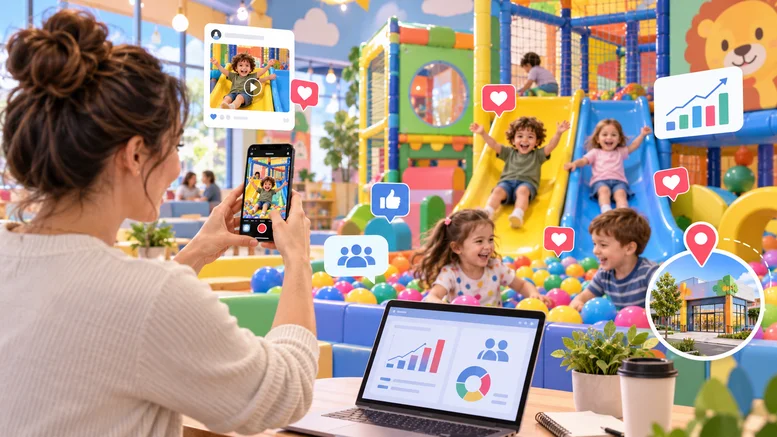
Instagram-friendly design helps marketing and trust. Parents judge cleanliness, safety, and professionalism within seconds (which is a key part of how to attract parents). If the facility looks chaotic, they assume operations may be chaotic too.
4. Safety And Cleanliness Are Now Part Of The Product
Safety used to sit behind the scenes. Now it has to be visible. Parents look for clean surfaces, posted rules, age separation, staff presence, secure check-in, and equipment that clearly gets maintained.
For soft contained play, ASTM F1918-21 covers safety performance and aims to reduce serious injuries. Operators should also follow local codes, fire safety rules, insurance requirements, maintenance schedules, and inspection records.
Strong operators build safety into daily routines: separate toddler and older-child areas, clear capacity limits, logged cleaning rounds, assigned staff zones, padding checks, posted hygiene rules, fast incident reporting, and regular inspections.
Cleanliness can support pricing. Parents will pay more when they can see the venue is well run.
5. Inclusive Play Is Moving Beyond Compliance
Accessibility is becoming a competitive advantage. The U.S. Access Board puts it plainly: “the standards are only minimums.” That is the right mindset for indoor playground design.
The stronger trend is inclusive play that works for more kids in real life: wheelchair-accessible routes where possible, transfer points, sensory-friendly rooms, quieter time slots, visual schedules, soft lighting zones, and staff trained to support children who get overwhelmed by noise or crowds.
This is especially useful for birthday parties. If one child in a class needs lower sensory input, a venue that can support that child becomes easier for the whole group to choose. Inclusion improves the guest experience and expands the addressable market.
6. Memberships And Dynamic Pricing Are Growing
Single-visit admission still matters. Memberships are becoming more important in the U.S. indoor playground market. Parents like predictable pricing. Operators like recurring revenue. Common offers include unlimited play, sibling add-ons, off-peak toddler passes, seasonal passes, birthday discounts, and loyalty points.
Dynamic pricing is also spreading. A Tuesday morning slot does not carry the same demand as a rainy Saturday afternoon. Smart pricing can shift traffic and make slower hours more attractive.
The key is transparency. Parents accept variable pricing when the value is clear and the rules are easy to understand.
7. Birthday Parties Are Becoming Premium Products
Birthday parties remain one of the strongest revenue streams for indoor playgrounds. The trend is toward done-for-you packages with less work for parents and more margin for operators. You can see how this works in practice in our recent looks at the Minneapolis and Houston kids’ birthday party markets.
Premium packages often include private rooms, dedicated hosts, digital invitations, waiver collection, themed decorations, food, custom desserts, party favors, and full-facility buyouts.
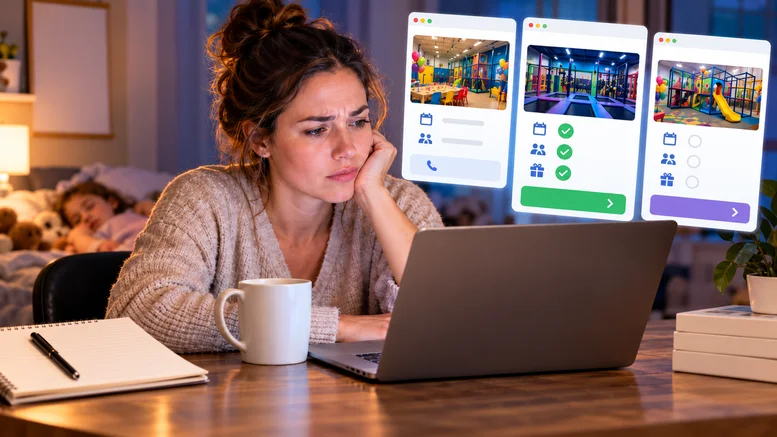
Parents are paying for convenience as much as play. The smoother the booking flow, the easier it becomes to sell higher-tier packages.
What Operators Should Do Next
The next phase of the U.S. indoor playground market will reward venues that feel active, clean, flexible, and easy to use. You do not need every new technology at once. Start with upgrades that improve repeat visits, parent trust, and revenue per square foot.
Focus on five moves:
- Add one interactive attraction that can be refreshed with new games or challenges.
- Improve parent comfort with seating, Wi-Fi, visibility, and better food or coffee.
- Create at least one quieter space for sensory breaks.
- Build memberships around real usage patterns, especially off-peak demand.
- Treat birthday parties as a core product, with clear tiers and a low-friction booking process.
- Launch new locations with a structured grand opening marketing playbook to capture early community waitlists and founding members.
Indoor playground trends point toward a more mature market. The basic play structure still matters. It now sits inside a broader family experience. Families want movement, safety, convenience, and a place that feels worth returning to. Operators who design around those needs will have the strongest position.